Oil Pastel Media Study
- Caroline Harding

- Nov 16, 2023
- 12 min read
What are Oil Pastels?
Sakura Color Products of Osaka, Japan, first invented the oil pastels in the 1920s and called them Cray-Pas (Schukei, 2021). They were made from wax, oil, and pigment with the intention that children could use them as they were non-toxic. Other manufacturers have also created versions of the oil pastels, including Crayola, and they are frequently used in the classroom even today. Thirty years after the oil pastels were first invented, Henri Sennelier created the first artist-grade version using upgraded materials, Sennelier oil pastels, at the request of contemporary artists like Picasso (Schukei, 2021). Oil pastels are very versatile as they can be used for both drawing and painting.
Schukei, A. (2021). A new way to look at oil pastels. The Art of Education University. Retrieved from https://theartofeducation.edu/2020/10/16/new-way-to-look-at-oil-pastels/#:~:text=Oil%20pastels%20were%20first%20created,crayons%20and%20suitable%20for%20children.
How are they Made?
What Different Types of Oil Pastels Exist?

Like many other art materials, there are a wide variety of different forms, sizes, and colors that oil pastels come in. Above is a picture of three different sizes of oil pastels from one brand, Sennelier, compared to the size of a pencil. It is essential to note the different width options because of how they can affect a student's ability to handle the material. Furthermore, while many oil pastels are not water-soluble, there are some brands that have created water-soluble oil pastels, such as Crayola. Additionally, there are options for different types of pigments outside of the traditional color range, such as Sennelier's iridescent set. Realistically, there aren't many different forms of oil pastels outside of the stick format because a more liquid option to this material is oil paints, the material they are based from.
What are known brands?
Some of the most well-known brands include; Cray-Pas Sakura, Crayola, Pentel Arts, Sennelier, Faber Castell, Niji, Mungyo Gallery, Paul Rubens, HASHI, Holbein, and Caran d’Ache, to name a few.
Another artist and teacher, Lindsay Weirich (AKA the Frugal Crafter), created a video testing the different brands of oil pastels she owned to compare price and quality. I also tried two of the seven brands, Pentel and Sennelier, which I found I largely agreed with her conclusion. This is a helpful video to watch when considering what brand works for you.
What Brands / Types I am Testing
- Cray-Pas Sakura
- Junior Artist Oil Pastels, Set of 12 - $2.17 (Plaza Artist Material)
- Expressionist Oil Pastels, Set of 12 - $5.35 (Plaza Artist Material)
- Crayola Portfolio Series
- Water Soluble Oil Pastels, Set of 12 - $6. 75 (Plaza Artist Material)
- Pentel Arts
- Oil Pastels, Set of 16 - $2.72 (Plaza Artist Material)
- Sennelier
- Oil Pastels, Set 12 - $31.53 (Plaza Artist Material)
Other helpful materials:

While oil pastels don't need any other material to be successful besides a material to draw on, some other tools and materials can be beneficial to create different effects. When sharpening oil pastels, some of the harder pastels can be used in a hand sharpener, while those that are too soft should be sharpened using an x-acto knife. Also, it can be helpful to have some tape to block certain areas and create sharper lines. Next, a hairdryer, pallet knives, and a tool that can be used for scraping can help achieve different textures. Then, oil mediums such as linseed oil can work for thinning out most oil pastels, while water can be used for water-soluble oil pastels for the same effect. In order to use either of these options, one should also work with a brush. Lastly, fixative, hairspray, or wax paper can be used to help preserve oil pastel artworks.
Brand Tests:
Cray-Pas Sakura
Junior Artist Oil Pastels


Facts:
- These are from the brand that initially invented oil pastels.
- They are the traditional set found in most art classrooms.
- These are made for beginners (beginner/student grade)
PROS:
- There are a good range of primary colors
- The colors themselves are decently vivid and bright
- Compared to other brands, this set was fairly smudge resistant
- The pastels have good strength and are more difficult to break on accident
- Small size allows for more accessible detail work
- Cheap
CONS:
- The pastels feel very dry compared to other brands
- It is harder to create smooth blending transitions
- The pastel itself is more complex than others which can make it difficult to layer
- It is harder to create consistent coverage in large areas
- The pastel does create a lot of flakes
- The tip is not sharpened or pointed, which makes it harder to create small marks or lines
Expressionist Oil Pastels


Facts:
- These are from the brand that initially invented oil pastels.
- They are the higher grade pastels from this brand (student grade).
PROS:
- There are a good range of primary colors (same as JA)
- The colors themselves are decently vivid and bright (same as JA)
- The pastel is a lot more fluid and feels less dry than JA
- The colors are able to blend easily (blends better than JA)
- The pastels have good strength and are more difficult to break on accident
- Larger size allows for students to have a more manageable grip
- The pastel is easier to spread about to create an even layer in large areas
- More expensive than JA but still relatively affordable
CONS:
- It is harder to create smooth blending transitions
- The pastel is still on the stiffer side, which can make it difficult to get lots of thick textures
- The pastel does create some flakes
- The pastel is easier to smudge
- The tip is not sharpened or pointed, and coupled with its size, makes it more complex to create small marks or lines
Crayola Portfolio Series Water Soluble Oil Pastels


Facts:
- Unlike traditional oil pastels, these can be dissolved by water.
- This brand is known for being non-toxic and safe for kids.
- Student quality
PROS:
- Lots of different options to blend
- The colors themselves are vivid and bright
- The colors are able to blend with each other
- Larger size allows for students to have a more manageable grip
- The tip is sharpened and pointed, which helps makes it easier to create minor marks or lines
- The pastel is easier to spread about to create an even layer in large areas
- Compared to other brands, this set was fairly smudge resistant
- More expensive than others but still relatively affordable
CONS:
- It is harder to create smooth blending transitions
- There is a limited range of colors
- The pastel feels on the drier side
- Several of the pastels broke quickly
- The pastel is still on the stiffer side, which can make it difficult to layer
- The pastel does create lots of flakes
- The pigment is not as opaque as other brands
Pentel Arts Oil Pastels


Facts:
- The Pastels are Acid-free are long-lasting
- Student quality
PROS:
- There are a great range of primary colors
- The colors themselves are vivid and bright
- The colors are able to blend with each other very easily
- The pastel is a lot more fluid and doesn't feel dry
- The pastel is easier to spread about to create an even layer in large areas
- Small size allows for easier detail work
- The pastels have good strength and tend not to break by accident
- Cheap
CONS:
- The tip is not sharpened or pointed, which makes it harder to create small marks or lines
- Basic set is missing purple, a color that can be harder for students to make on their own
- The pastel is still on the stiffer side, which can make it difficult to layer
- The pastel does create some flakes
- The pastel is easier to smudge
Sennelier Oil Pastels

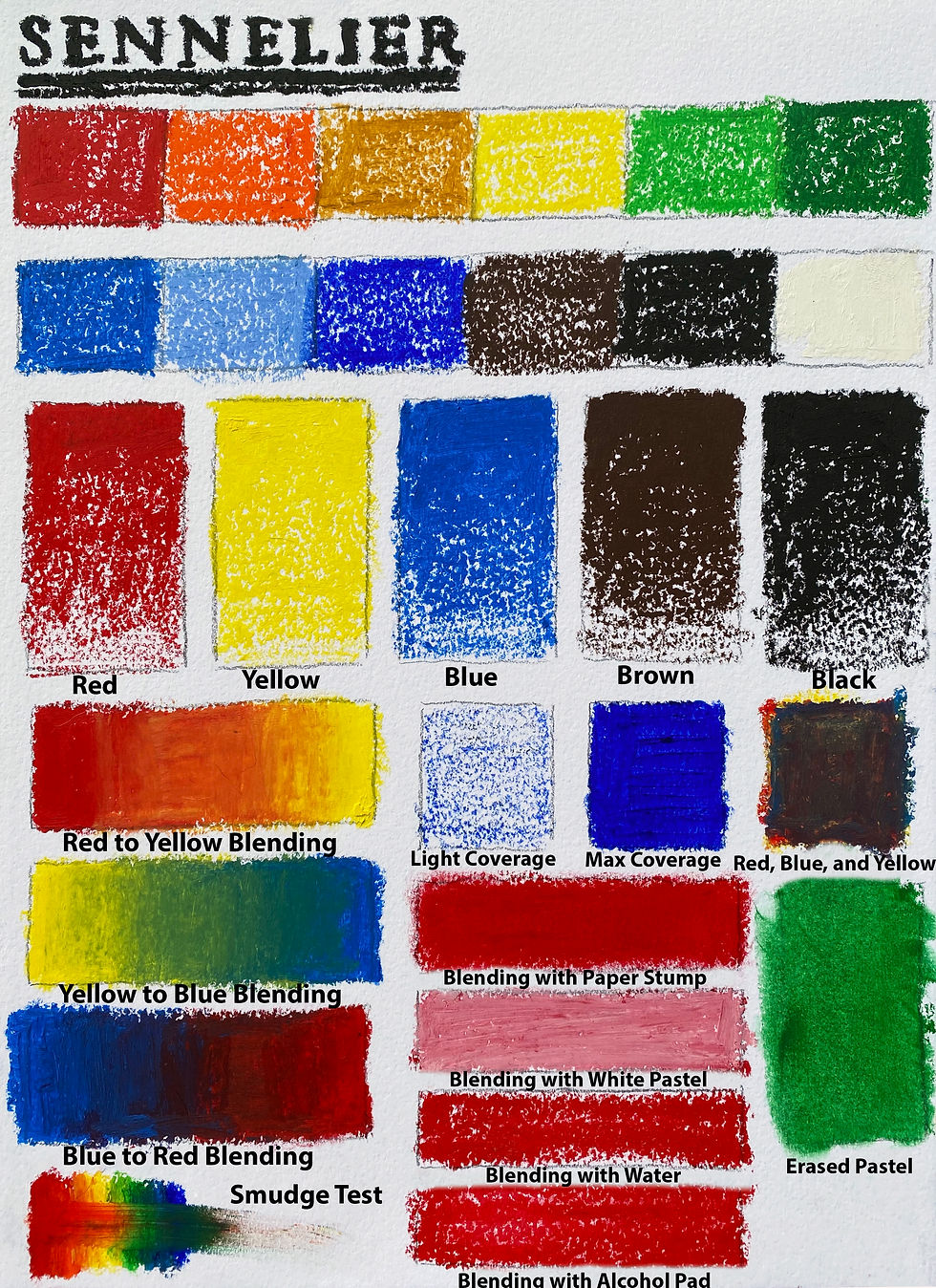
Facts:
- The first artist-grade quality oil pastels (made for Picasso)
PROS:
- The pastel is very fluid and feels buttery smooth
- There are a great range of primary colors
- The colors themselves are vivid and bright
- The colors are able to blend with each other very easily
- The pastel is easier to spread about to create an even layer in large areas
- Small size allows for easier detail work
- The pastels have good strength and tend not to break by accident
- The pastel doesn't make any flakes
- The tip is sharpened and pointed, which helps makes it easier to create small marks or lines
CONS:
- Basic set is missing purple, a color that can be harder for students to make on their own
- The pastel is still on the stiffer side, which can make it difficult to layer
- extremely prone to smudging
- The pastel can contain toxic materials
- It can be very messy
- Its soft nature can create some situations where students might waste pastels because of unnecessarily smashing on papers
- Very expensive
Techniques:
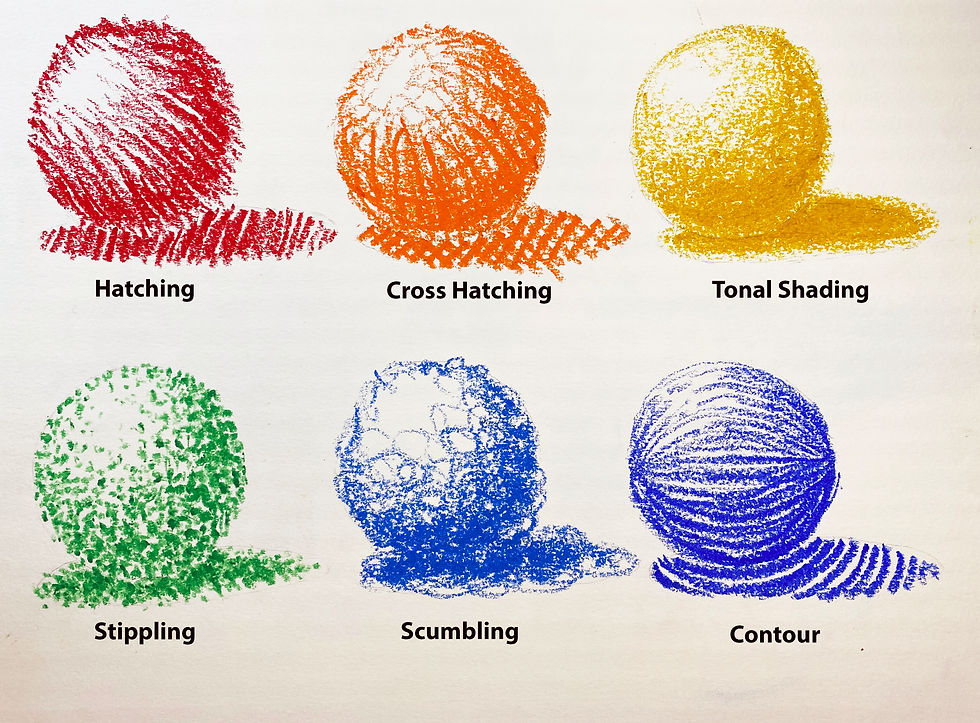
Traditional Rendering: With Pentel Arts Oil Pastels
Notes:
- I expected oil pastels to behave similarly to crayons in regards to traditional rendering techniques. While there are a lot of similarities, they are a lot harder to get small clean lines from than crayons.
- It was harder to get small round dots with sticks that were so broad, so either having them sharpened/shaped before trying stippling or making the dots large would be helpful tips.
- It can be harder to get an even tonal gradient, but it is possible.
- I would not recommend using oil pastels for a project that needs a lot of precise tiny details and lines.
Different Modes of Blending/Shading: With Pentel Arts Oil Pastels

Notes:
- There are many different ways to blend different colors together when rendering, creating different effects.
- Using your finger or a piece of a napkin can help blur edges to create a smoother effect. It can also be used as a technique for creating a base layer that covers all the white of the paper.
- I personally am not overly fond of overly smooth drawings that lack texture, so I went back into the first sunflower with a light and dark pastel to better define certain edges and establish the lights and darks.
- Light blending is a great way to build different layers over time and slowly create dark sections. This can allow students to apply a layer that only looks at local colors and then apply perceived colors on top.
- Light blending tends to allow the paper to show through, so it might be beneficial to use toned paper.
- Heavy blending allows for less building than light shading, but colors can still be blended when applied heavily. If colors aren't mixing the way you want to, it might be because there is too much pigment on the paper which can be addressed by simply scraping off the pastels and then starting again.
- Heavy blending works very well to create bold, vivid colors.
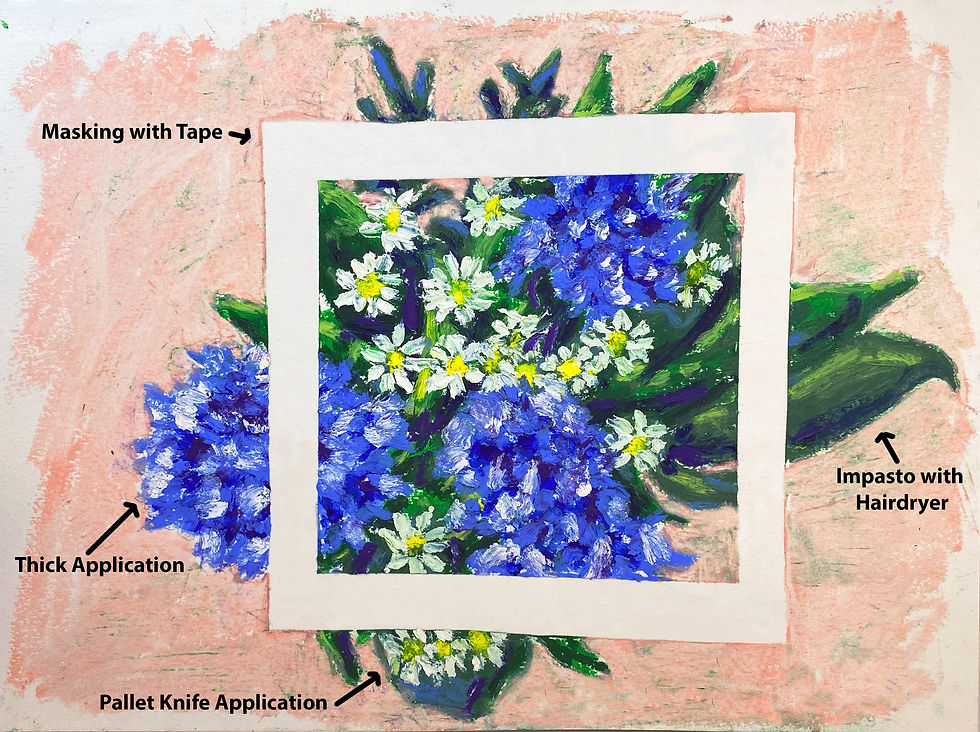
Different Applications: With Sennelier Oil Pastels
Notes:
- It is imperative to note that oil pastels are incredibly prone to smudging, and once they are put on paper, you can scrape off the pigment, but it will stain the paper. Using tape to mark off the border of the paper or a section that you don't want pastels on helps prevent smudges in that areas and creates nice crisp edges.
- I prefer to create a lot of texture when working with oil pastels in a manner similar to what is shown above.
- You can create tension through different textures, like using thin applications and thick applications together.
- Warming up the pastels with a hairdryer is something I have never done before, but I found it very helpful to create an Impasto-like texture.
-Sennelier pastels are already incredibly butter and soft, so it doesn't take much to make them layer like shown above. Still, it can be harder to get this thick texture for harder pastels like Cray-Pas, so bringing in a hairdryer to use with harder pastels might be beneficial.
- It can be challenging to start mixing up the pastel with a pallet knife, but after it is warmed up and mixed a few times, it becomes incredibly similar to traditional thick oil paint.
Different Ways to get Detailed Lines: Using Expressionist Oil Pastels

Notes:
- I tried some similar techniques with crayons and was curious how they would compare to oil pastels.
- Oil pastels are much better at creating smooth, even coverage over large areas than crayons.
- The transfer color technique was much easier to use with oil pastels than crayons, given how much more of the pigment and binder is transferred to the paper.
- The sgraffito on paper reacted inversely to how it worked with crayons. Instead of avoiding the carved lines scratched into the paper, it actually coalesced into the lines, creating a darker pattern.
- The sgraffito on color behaved very similar to crayons; it was just easier and quicker to get the colors down as well as completely covering up the first layer compared to crayons.
Different Mediums: Crayola Portfolio Series Water Soluble Oil Pastels and Cray-Pas Sakura Junior Artist Oil Pastels

Notes:
- Both of these options are great techniques for building a base layer that can be layered upon further.
- The Crayola water-based oil pastels worked similarly to watercolor pencils, just with slightly less of an ability to pick up colors and lighten them further with water.
- The oil medium worked to help spread it about, but the medium can create oil stains on the paper.
- These options will water down the medium and make it more transparent and less vivid.
- I would prefer the Crayola water-soluble oil pastels over using an oil medium for regular oil pastels because it will be less of a mess with students and safer for them.
How to Protect and Preserve Oil Pastel Works:

Due to the nature of oil pastels being prone to frequent smudging, it is important to note different strategies to preserve and prevent damages to finished artworks. One option is to cover a piece with wax paper in storage because it will prevent the colors from rubbing off on other objects and smearing. This will not protect the work, however, once it is removed. This is better for short-term storage during the creation process and when stored in a stack of papers. Another option is to apply a fixative spray to help a work maintain its integrity. There are a few options, including general fixative sprays, most hairsprays, and oil pastel exclusive sprays that can be used to help protect oil pastel work. However, it is essential to note that these sprays can change the colors of work, and while they will offer a layer of protection, the work can still be smudged and damaged with force.
Different Papers:
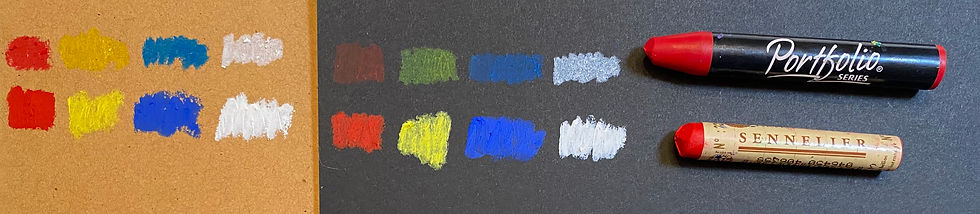
Oil pastels will work on a variety of different surfaces and different colored papers. While lighter colors tend to show up better on darker papers and vice versa, white pastel can be applied to the paper and then covered with other colors a few days later once the base pastel has had some time to set and stiffen. However, different pastels have different pigment to oil and wax medium ratios, which can affect how pigmented the material is and how opaque it is. Above are two different brands, Crayola and Sennelier, showcasing how different opacities can affect oil pastels on colored papers.
Artist Example: Marianne Mitchell
Marianne Mitchell is a contemporary artist who creates abstract works with oil pastels. She has a bachelor's of fine art from Washington University and has completed post-masters work in Japan, China, and the United States at the Vermont Studio Center. She creates a luminous layered effect through her use of light, color, and movement with the oil pastels. She explains her approach, “Through color, line, value, shape, and texture, my visual poems realize the reciprocity between tangible existence and intangible magic” (Mitchell, 2021, Thoughts). Mitchell is a Mid-Atlantic Arts Foundation Fellowship recipient, and her works have been displayed at various shows internationally and included in collections at the Wharton School at the University of Pennsylvania and Sloan Kettering Cancer Research Center, to name a few.

Emerging Shimmer | Oil Pastel | 7" SQ https://www.mariannemitchell.com/oil-pastels

Parcel of Night | Oil Pastel | 7" SQ https://www.mariannemitchell.com/oil-pastels
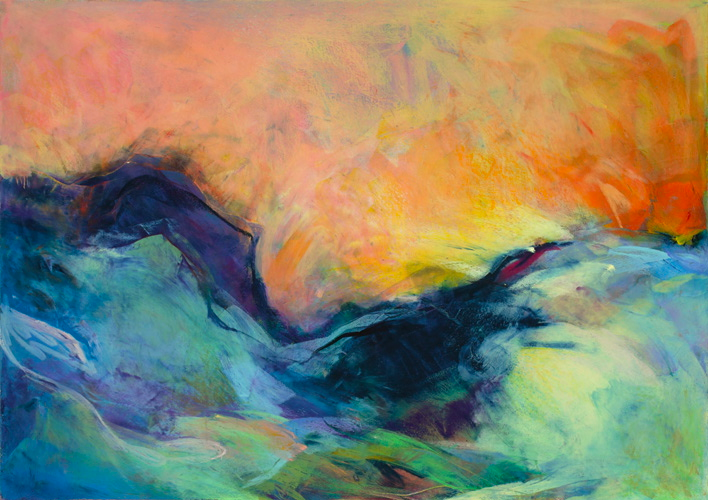
Dance the Light | Oil Pastel | 22" x 30" https://www.mariannemitchell.com/oil-pastels
Mitchell, M. (2021). Mariane Mitchell. Contemporary abstract art. Retrieved from https://www.mariannemitchell.com/about
Safety Measures while Using Oil Pastels:
Most oil pastels are non-toxic and do not pose an inhalation risk. However, some colors may contain a toxic pigment that is cause for concern if ingested (Baylor University, n.d.). Very young children should not use oil pastels, as they tend to put things in their mouths. According to the data safety sheet for Crayola Portfolio oil pastels: a poison control center should be called if someone does ingest the oil pastels (Blick Art Materials, 2018). Outside of ingestion, oil pastels are usually safe for children to use. All but one of the brands I tested for this blog have The Art, and Creative Materials Institute (ACMI) Approved Product (AP) seal, meaning they are non-toxic (ACMI, 2022). The outlier was my Sennelier oil pastels, which are rated Cautionary Labeling (CL) due to the possibility that they hold toxic minerals such as cadmium in their formula. This means the Sennelier oil pastels should not be used by students below grade 6 and with extreme caution with older students (ACMI, 2022).
Art and Creative Materials Institute [ACMI] (2022), About ACMI. Retrieved from https://acmiart.org/index.php/about-acmi
Baylor University. (n.d.) Environmental Safety. Section 10: Painting and drawing. Retrieved from https://www.baylor.edu/ehs/index.php?id=94372#:~:text=Crayons%20and%20oil%20pastels%20do,fix%20drawings%20contain%20toxic%20solvents.
Blick Art Material. (2018) Safety Data Sheet. MSDS for #20066 - Crayola oil pastels. Retrieved from: https://cdn.dick-blick.com/msds/DBH_SDS_20066XXXX.pdf
Possible Applications for Different Ages of Students:
I believe that oil pastels are best suited to middle and high school students. After conducting this study, I find that I would worry that young students wouldn't be able to control the medium and would make lots of messes by smudging the material everywhere on their paper, drawing on other sources, or spreading the material all over themselves. Furthermore, I would be extremely concerned with younger students consuming the material and getting sick. However, I do think that it can be beneficial to introduce the medium to older elementary students (grade 3 or 4 and up) to expand their artistic repertoire. I feel like middle school students and older will have the fine motor skills necessary to address the medium adequately, and I would be more willing to let them explore with different techniques such as warming the pastel or using pallet knives to apply impasto like textures. I think that it might be handy to have a set or two of the Crayola water-soluble pastels because while I don't think they have the best quality, I think that their ability to create easy base layers with water is an excellent characteristic. I believe that using a brand like Pentel for beginner students and offering some Cray-Pas Expressionist Oil Pastels for more advanced students would work well. As for colors, I would follow the advice of Hafeli (2015) from the textbook exploring studio materials and start with only a few colors to promote exploration and then slowly offer a few additional colors (p. 49).
Comfort level going forward:
Having completed this study, I feel more confident in my skills and knowledge of this material. While I have used oil pastels before, I prefer chalk pastels over oil, which has led to an imbalance in my understanding of these mediums. This process helped me understand just how versatile this medium can be. Before this blog, I had no idea that water-soluble oil pastels existed or that Sennelier oil pastels come in so many different sizes. I believe after conducting this test that I would be able to comfortably navigate this material in the classroom with a variety of different ages. My confidence mainly stems from how this study has helped me better understand oil pastels' strengths, limitations, and possibilities and how they differ between different brands. The only thing I would like to do is continue testing out some of the student grade pastels, such as Pentel, to be able to understand them as well as I do my Sennelier set.


Comments